How thick should your concrete be?
What sits on the concrete decides how thick it is and how it's reinforced. Here is how we size a driveway, a pad, or a slab, and why the ground under it matters as much as the inches.
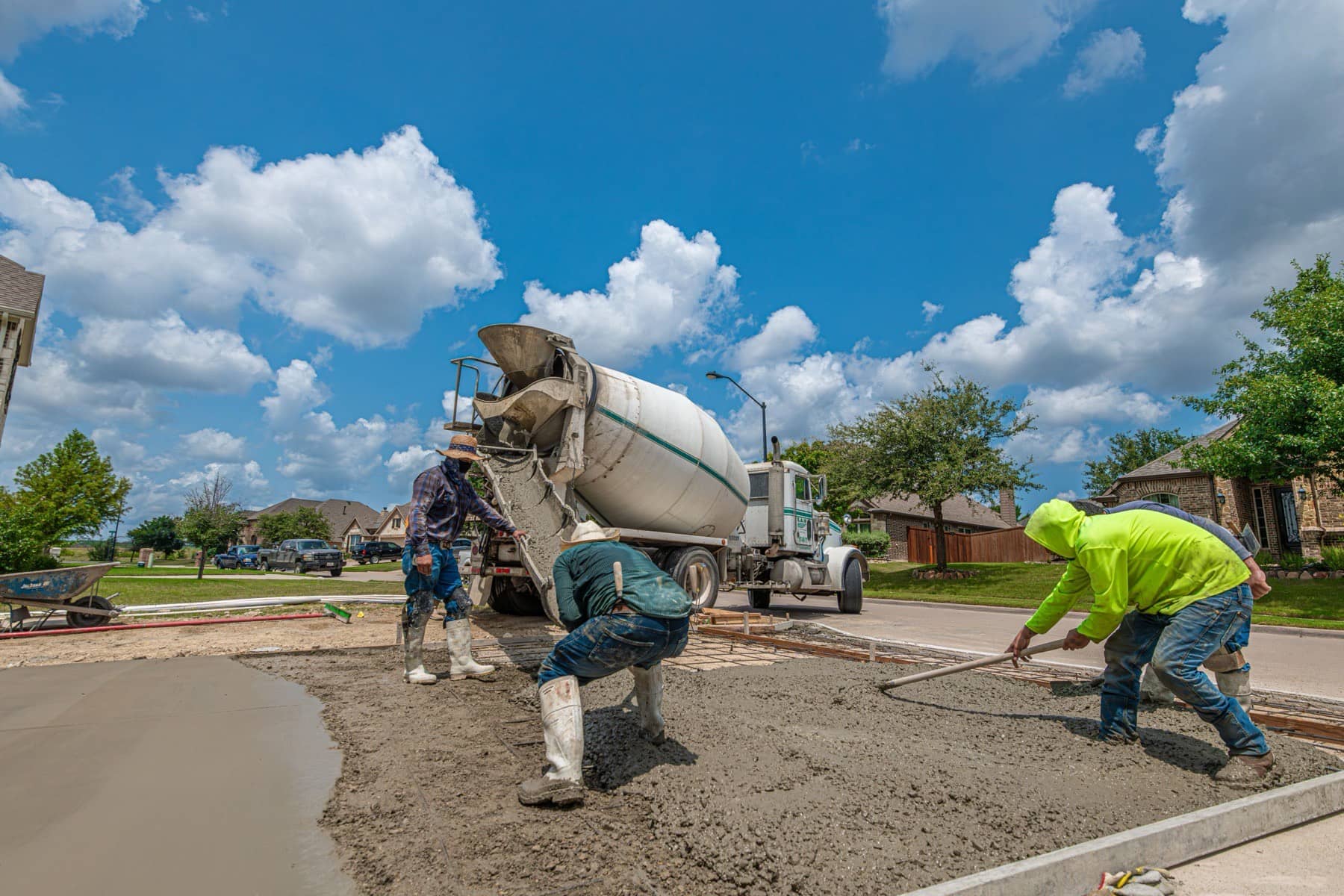
Cars, trucks, RVs, and trailers
We pour 4 inches for cars, and thicker where trucks, RVs, or trailers park. A 5- or 6-inch section for trailers or RVs uses more concrete than a 4-inch one.
On a lake property, that often means room and thickness for a boat trailer. A boat trailer pad or a wider driveway needs a thicker section where the trailer sits and room to back it in. The Flowery Branch and Cumming pages cover trailer pads and widenings.
Thicker concrete and more steel for trucks, RVs, trailers, or hot tubs push a price up. The concrete cost guide has the estimated ranges, and driveway installation covers the full job.
Pads for sheds, hot tubs, and garages
Four inches handles most sheds and light use. Hot tubs, garages, and heavy equipment often call for more, or for thickened edges. Your shed, hot tub, or building maker may list a requirement. Bring it to the quote and we'll match it.
A filled hot tub can weigh several thousand pounds and sits in one spot all year, so we size the slab to the tub's footprint and the maker's specs. If a roof or screen room might come later, its posts need footings, not just a 4-inch slab. See concrete slabs for what's included.
Reinforcement
We place rebar, wire mesh, or fiber matched to the job. Heavier loads need thicker concrete and more reinforcement, and we set anchor bolts in the pour if your shed or carport needs them. An enclosed building can also call for a vapor barrier under the slab.
The base and the red clay
How long concrete lasts depends on the ground under it. Around here that ground is often red clay, which drains slowly and goes soft when it's wet, so every job starts with digging out and building a compacted stone base.
Soft or wet clay has to be dug out and replaced with stone. A thin or missing base, ground that wasn't compacted, and water getting under the slab are among the usual reasons a driveway cracks and sinks.
Control joints
Some cracking is normal for concrete. Control joints give it a planned place to crack, in a straight line inside the joint instead of across a panel. A solid base and the right joint spacing keep cracks small and level.
Cure time
You can usually walk on new concrete after a day or two. Wait about a week before driving on it, and longer before parking anything heavy. Concrete keeps gaining strength for about a month.
Questions homeowners ask
How thick should a driveway be?
Four inches for cars. Where trucks, RVs, or trailers park, a 5- or 6-inch section.
Can a slab hold a hot tub?
Yes, if it's built for it. We size the slab to the tub's footprint and the maker's specs.
When can I drive on a new driveway?
Wait about a week before driving on it, and longer before parking anything heavy.